Perioral and Periorbital Dermatitis: 20 Hidden Triggers
Prepared by Pharmacist Berfin Işık. Pharmacist, dermocosmetics, and active ingredient expert. This content is for informational purposes only and does not substitute for medical advice.
Perioral dermatitis is a persistent skin condition characterized by small red papules, scaling, and burning around the mouth, often misdiagnosed and mistreated. When the same condition appears around the eyes, it's called periorbital (or periocular) dermatitis. The biggest pitfall is this: as individuals use corticosteroid creams and heavy moisturizers to "clear the spots," the condition temporarily improves, but then flares up even more severely when treatment is stopped. In this guide, we explore 20 hidden triggers that fuel perioral and periorbital dermatitis, categorized under topical/cosmetic and systemic/biological headings, supported by scientific evidence.
What are Perioral and Periorbital Dermatitis?
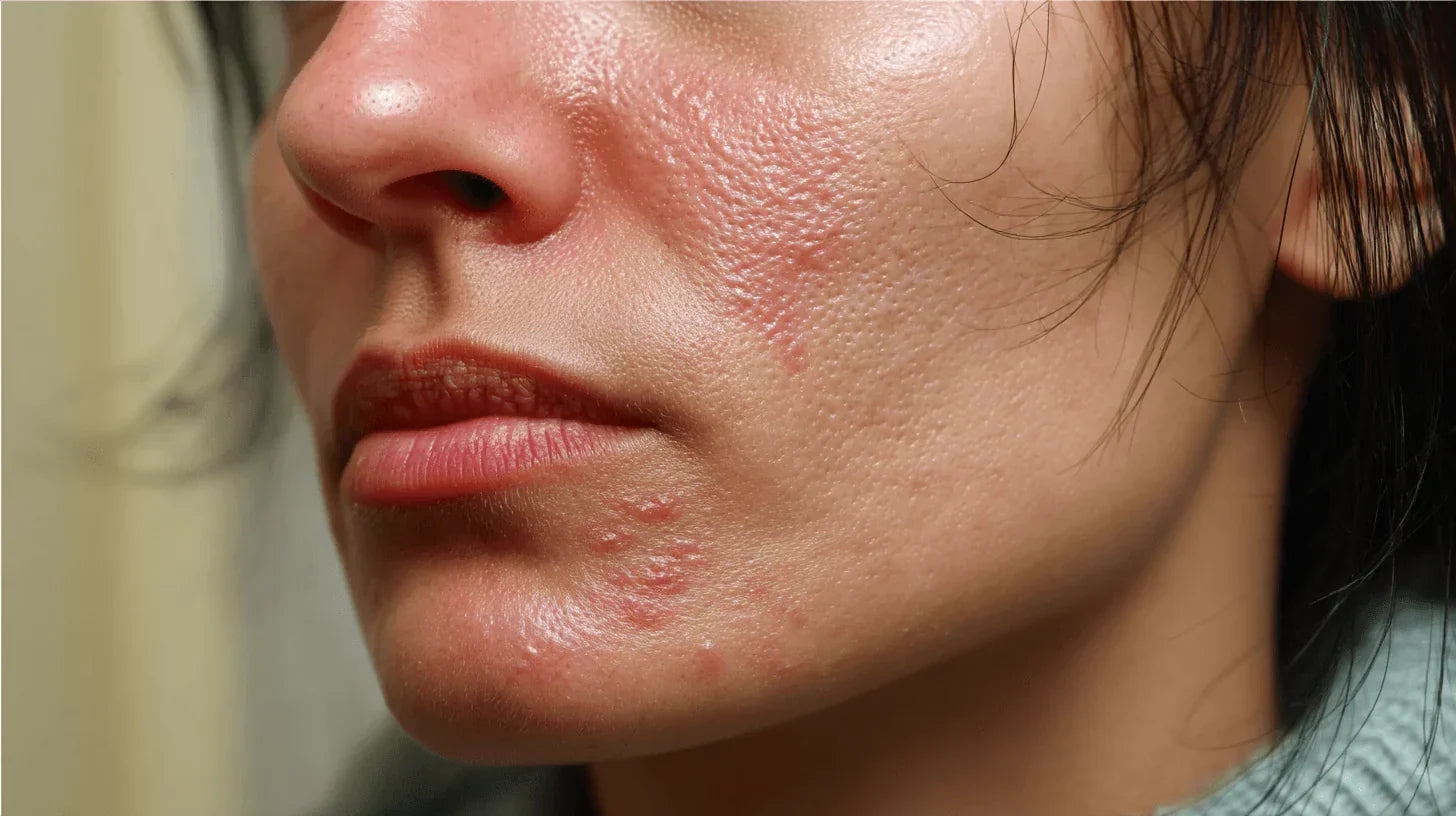
Perioral dermatitis is a papulopustular rash that congregates around the mouth, nasal folds, and chin. It resembles acne but can also have an eczematous (red and scaly) appearance. A characteristic clue is the preservation of a thin strip of healthy skin immediately around the lip border. When the same process occurs on the eyelids and around the eyes, it is called periorbital dermatitis. Systematic reviews indicate that the strongest and most consistent cause of the condition is the misuse of topical corticosteroids (cortisone creams); however, the process is multifactorial.
How Does It Form on the Skin?
At the core of perioral/periorbital dermatitis lies a compromised skin barrier and inflammation around the hair follicles. Cortisone creams used for prolonged periods thin the skin barrier, alter vascular structure and microbiota; when the cream is discontinued, a "rebound" flare-up occurs, prompting the individual to resume cream use, thus establishing a vicious cycle. Microorganisms such as Demodex mites, Fusobacteria, and Candida, as well as occlusion (the skin's inability to breathe), also contribute to the condition. Atopic/sensitive skin types, whose barrier is already delicate, are more prone to this process. We discussed how to repair the barrier in detail in our skin barrier guide.
1. Topical and Cosmetic (External) Triggers: 10 Hidden Causes
These triggers are products applied directly to the skin and cosmetic habits. Cortisone creams play the leading role.
- 1. Topical corticosteroids (cortisone creams): The most strongly evidenced cause in the literature. Cortisone creams used long-term on the face initially improve the condition, but return with a severe flare-up when discontinued. Applying cortisone cream to the face without a doctor's recommendation is the most common trigger.
- 2. Occlusive and heavy moisturizers: Thick, oily creams and petroleum-jelly-based formulas "seal" the skin, trapping moisture and microorganisms around the follicles, exacerbating the condition.
- 3. Heavy foundation and makeup: High-coverage foundations and powders create occlusion; they particularly increase rashes around the mouth and eyes.
- 4. Fluoride toothpaste: Toothpastes with high fluoride content can trigger perioral dermatitis around the mouth; there are case reports in the literature linked to toothpaste. If the condition is persistent, switching to a fluoride-free/SLS-free toothpaste can be tried.
- 5. Sulfate (SLS) toothpaste and cleansers: Harsh surfactants like sodium lauryl sulfate weaken the barrier; they irritate the perioral area in both toothpaste and facial cleansers.
- 6. Perfumes and essential oils: Fragranced cosmetics and essential oils like citrus/mint can inflame sensitive perioral skin. We discussed the risk of allergenic fragrances in our organic cosmetics and safety guide.
- 7. Excessive exfoliation and acid peels: Frequent use of AHA/BHA, retinoids, or physical scrubs compromises the barrier, triggering rashes. Active peels should be paused during perioral dermatitis episodes.
- 8. Heavy layers of sunscreen: Some creamy sunscreens applied too thickly can create occlusion and worsen the condition; lightweight, non-comedogenic formulas should be preferred.
- 9. Mask use (maskne / mechanical occlusion): Wearing face masks for extended periods can trap moisture and heat around the mouth, triggering perioral dermatitis; it has been associated with "maskne" in current literature.
- 10. Layering too many products: Applying dozens of serums and creams one after another (excessive "skin flooding") can strain the barrier in sensitive skin and exacerbate rashes. Simplicity is key in perioral dermatitis.
2. Systemic and Biological (Internal) Triggers: 10 Hidden Causes
These triggers are hormonal, microbial, and lifestyle factors within the body.
- 11. Inhaled and nasal corticosteroids: Cortisone sprays used for asthma and allergic rhinitis can trigger perioral dermatitis by contacting the mouth and nose area. Treatment changes must be planned with a physician.
- 12. Hormonal fluctuations: Menstrual cycle, pregnancy, and estrogen-containing birth control pills can exacerbate perioral dermatitis; most patients report an increase in rash before menstruation.
- 13. Demodex mites: Overproliferation of Demodex, a natural follicular mite of the skin, contributes to perioral/periorbital inflammation and fuels rosacea-like conditions.
- 14. Fusobacteria and Candida: Certain bacterial and fungal organisms (especially Fusobacteria and Candida) have been detected in perioral dermatitis lesions; microbial balance plays a role in the condition.
- 15. Gastrointestinal problems: Digestive and absorption issues are thought to indirectly increase skin inflammation; the gut-skin axis is an active area of research.
- 16. Atopy and genetic barrier weakness: Skin with atopic tendencies, which has an inherently sensitive barrier, is more prone to perioral dermatitis. We discussed sensitive skin management in our sensitive skin guide.
- 17. UV, heat, and wind: Environmental physical factors such as intense sun, heat, and wind increase vascular response, exacerbating the rash; in this respect, it is related to rosacea.
- 18. Stress: Chronic stress can negatively affect barrier function and inflammatory response, triggering perioral dermatitis attacks.
- 19. Lack of sleep and low immunity: Insufficient sleep disrupts the skin's nocturnal repair and microbial balance, facilitating rashes.
- 20. History of systemic steroids: Perioral dermatitis can also appear after oral or injected steroids; steroid exposure in all forms carries risk.
Overview of Trigger Groups
| Trigger Group | Dominant Mechanism |
|---|---|
| Corticosteroids (topical, inhaled, systemic) | Barrier thinning + "rebound" flare-up upon discontinuation |
| Occlusive cosmetics (heavy cream, foundation, mask) | Skin sealing, moisture and microbe entrapment |
| Oral products (fluoride, SLS toothpaste) | Chemical irritation in the perioral area |
| Microorganisms (Demodex, Fusobacteria, Candida) | Inflammation around the follicle |
| Hormonal and lifestyle (menstruation, stress, sleep) | Lowering of the inflammatory threshold |
| Barrier damage (excessive exfoliation, sulfates) | Compromising the protective barrier and irritation |
Special Warning for Periorbital (Around the Eye) Dermatitis
Redness and scaling around the eyes may not always be perioral/periorbital dermatitis. Conditions like periocular tinea (fungal infection) can look similar and are often misdiagnosed and worsened by cortisone creams. Therefore, for rashes around the eyes, it is essential to consult a specialist instead of self-applying cortisone; incorrect treatment can make the condition persistent.
Correct Approach to Perioral Dermatitis Management
The cornerstone of treatment for perioral/periorbital dermatitis is the "zero therapy" approach: discontinuing all unnecessary topical products, especially cortisone creams, heavy moisturizers, and makeup. A temporary flare-up (rebound) is expected during this time; this is part of the process, and gentle care should continue without panic. The routine is simplified: a sulfate-free gentle cleanser, an unscented and light barrier moisturizer, and soothing actives if needed. Proven treatment options include topical metronidazole, azelaic acid, adapalene, and oral tetracycline-group antibiotics under medical supervision; oral tetracycline has the strongest evidence. You can find the effects of azelaic acid on inflammation and spots in our azelaic acid guide, and common management principles with rosacea in our rosacea guide. Decisions on prescription medications must always be made with a physician.
Products Suitable for Perioral/Periorbital Skin at Medicblu
The goal in perioral dermatitis is to establish a simple routine with fragrance-free, soothing products that don't strain the barrier. The following options focus on barrier repair, soothing, and inflammation control:


![Alphascience Regen [Hx]](https://cdn.shopify.com/s/files/1/0708/3815/7541/files/Designsanstitre_1.webp?v=1739147234)

Frequently Asked Questions
Is it appropriate to apply cortisone cream for perioral dermatitis?
Generally no. While cortisone creams may initially improve the condition, they are the most common trigger for perioral dermatitis and lead to severe flare-ups when discontinued. Treatment should be planned by a physician, and steroids usually need to be stopped.
How long does perioral dermatitis take to clear up?
With zero therapy and appropriate care, significant improvement is usually seen within a few weeks; however, a temporary flare-up in the initial period after stopping steroids is normal. Prescription treatment can shorten the process. Patience and avoiding triggers are essential.
Should I change my toothpaste?
In persistent perioral dermatitis, toothpastes containing fluoride or SLS can be a trigger; trying a fluoride-free/SLS-free toothpaste can be considered. While not effective for everyone, it can be beneficial when other triggers are controlled.
Is periorbital (around the eye) dermatitis dangerous?
It is generally not dangerous, but rashes around the eyes can be confused with other conditions like fungal infections. Therefore, it is important to consult a specialist for an accurate diagnosis instead of self-applying cortisone.
Conclusion
Perioral and periorbital dermatitis is a multifactorial condition where topical/cosmetic habits, microbial factors, and lifestyle intersect, with corticosteroid creams being a primary culprit. The key to success is to eliminate triggers, treat the skin gently, establish a simple and barrier-friendly routine, and seek prescription support from a physician when necessary. You can benefit from our free skin care consultation to create a gentle care routine suitable for you.
References
- Searle T, Ali FR, Al-Niaimi F. Perioral dermatitis: Diagnosis, proposed etiologies, and management. J Cosmet Dermatol. 2021;20(12):3839-3848. PMID: 33751778 · DOI: 10.1111/jocd.14060
- Tempark T, Shwayder TA. Perioral dermatitis: a review of the condition with special attention to treatment options. Am J Clin Dermatol. 2014;15(2):101-113. PMID: 24623018 · DOI: 10.1007/s40257-014-0067-7
- Peters P, Drummond C. Perioral dermatitis from high fluoride dentifrice: a case report and review of literature. Aust Dent J. 2013;58(3):371-372. PMID: 23981221 · DOI: 10.1111/adj.12077
- Basak SA, Berk DR, Lueder GT, Bayliss SJ. Common features of periocular tinea. Arch Ophthalmol. 2011;129(3):306-309. PMID: 21402986 · DOI: 10.1001/archophthalmol.2011.14