What Does LED and Red Light Therapy Do for the Skin?
Prepared by Pharmacist Berfin Işık. Pharmacist and specialist in dermocosmetics and active ingredients. This content is for informational purposes only and does not replace medical advice.
LED light therapy and red light therapy have become some of the most talked-about treatments in recent years, both in clinical dermatology and in at-home beauty devices. But what do these different colors of light actually do to the skin? In this article, drawing on scientific sources, we explain how light works at the cellular level (photobiomodulation), the effects of red and near-infrared light on collagen and wound healing, the role of blue light against the acne bacterium Cutibacterium acnes, a brief look at the other colors, the difference between at-home and clinical devices, and what you can realistically expect.
What Is Photobiomodulation?
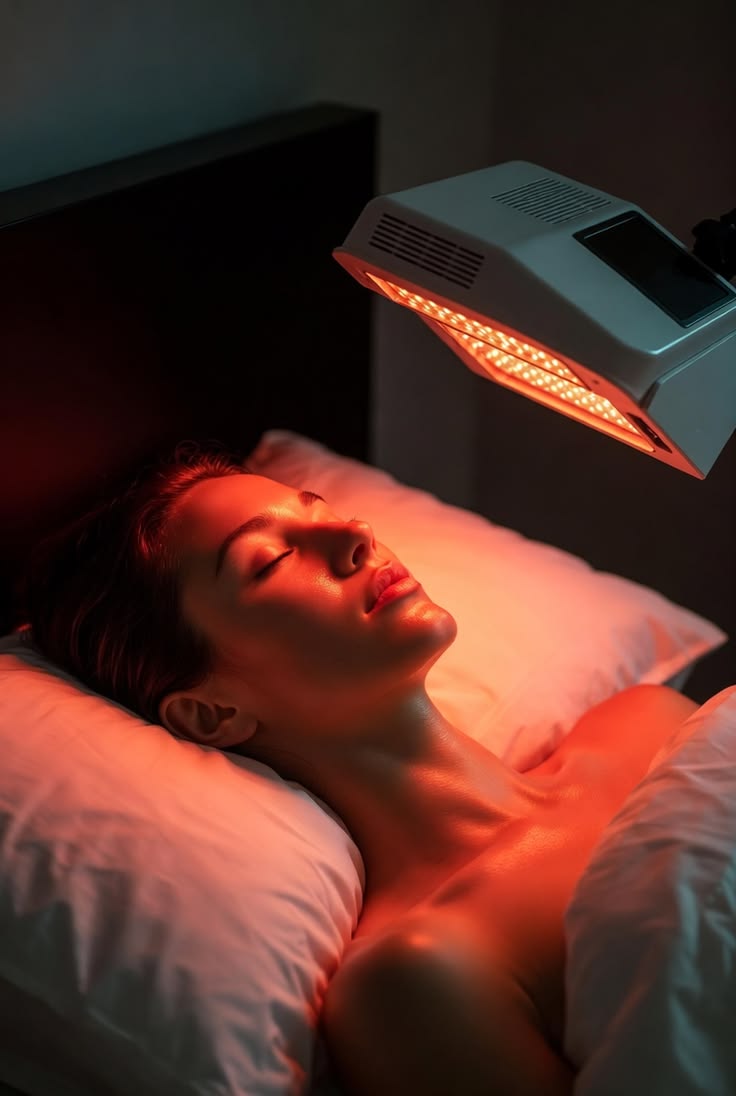
Photobiomodulation (PBM) is based on applying low-energy visible and near-infrared light to tissue to stimulate cellular activity; in the literature it is also known by its older name, "low-level light therapy" (LLLT). This light, which does not generate heat, is absorbed by chromophores found in the mitochondria of skin cells. When the main chromophore, the enzyme cytochrome c oxidase, captures light, the electron transport chain speeds up, production of ATP (the cell's energy currency) increases, and nitric oxide release and blood flow rise. This chain reaction supports processes such as fibroblast activation, collagen synthesis and tissue repair. In short, rather than "burning" the skin, light sends cells a kind of biological signal that stimulates their own repair mechanisms.
Why Does the Color of Light Matter? Wavelength and Penetration Depth
The color of an LED device actually indicates the wavelength of the light it emits, and therefore how deeply it penetrates the skin. Short-wavelength blue light (about 415 nm) stays at the surface of the epidermis, while red light (630-660 nm) reaches the dermis and near-infrared light (810-850 nm) reaches the deeper layers beneath the skin. This is why each color serves a different skin goal. The table below summarizes the effects of the main colors by wavelength.
| Effect | Description |
|---|---|
| Blue light (~415 nm) | Acts at the surface of the epidermis. By stimulating porphyrins inside the acne bacterium C. acnes, it generates reactive oxygen species and has an antibacterial and mild anti-inflammatory effect. Used in the management of inflammatory acne. |
| Red light (630-660 nm) | Reaches the dermis. Supports collagen production by stimulating fibroblasts, helps reduce redness and accelerates wound healing. |
| Near-infrared (810-850 nm) | The most deeply penetrating wavelength. Usually used together with red light for tissue repair, circulation and deeper collagen support. |
| Other colors (green, yellow, purple) | Green and yellow light are marketed for uneven skin tone and redness; purple light is a combination of red and blue. The level of evidence for these colors is more limited compared with red and blue. |
Red and Near-Infrared Light: Collagen and Anti-Aging Effects
The most researched area of red light therapy is skin rejuvenation and anti-aging. In a controlled clinical trial, participants treated with red and near-infrared light twice a week for a total of 30 sessions showed, in blinded evaluations, reduced skin roughness, increased patient satisfaction and a significant increase in dermal collagen density measured by ultrasonography. These findings are consistent with the hypothesis that red light increases collagen production by stimulating fibroblasts. For those who want to support collagen production from within, light therapy alone is not enough; it should be considered together with proven actives such as retinoids, peptides and antioxidants. On this topic, you can take a look at our guide to the active ingredients every anti-aging routine should include.
Blue Light: Its Effect on Acne and C. acnes
Blue light therapy, on the other hand, stands out particularly for inflammatory acne. The mechanism is elegant: the bacterium Cutibacterium acnes (formerly Propionibacterium acnes), which plays a role in acne formation, naturally produces molecules called porphyrins. When blue light stimulates these porphyrins, the reactive oxygen species released damage the bacterium. Systematic reviews report that blue light can bring about meaningful improvement in the overall picture of acne, but that more detailed studies are needed to standardize protocols. In a split-face clinical study, the half of the face that received eight sessions of blue light twice a week showed a marked reduction in acne severity compared with the untreated side; however, it was emphasized that nodulocystic (deep, cystic) lesions did not benefit sufficiently from this method. Light therapy remains limited for the marks acne leaves behind; to learn about mark types and the right approach, we recommend reading our article acne marks: PIE, PIH and atrophic scars.
What Does the Scientific Evidence Say?
Comprehensive reviews in the dermatology literature state that low-level light therapy has positive effects on wrinkles, acne scars, hypertrophic scars and burn healing, and that the method is considered safe because of its non-invasive nature and the near absence of side effects. Reviews examining the effects of visible light on the skin also confirm that red and blue light are used for antimicrobial and anti-inflammatory purposes in acne. There is, however, an important caveat: the wavelength, dose (J/cm²), session frequency and duration used vary widely between studies. This heterogeneity makes it difficult to define "a single right protocol for everyone" and means that results may vary from device to device.
At-Home Device or Clinical Device?
LED masks and handheld devices on the market generally have lower light power (irradiance) than professional panels used in clinics. This does not mean that at-home devices do not work; however, results can be expected to come more slowly and to require more regular, long-term use. While clinical devices operate with higher energy density and standardized protocols, the wavelength and power information on the labels of home devices may not always be transparent. If red light support is being considered after an aesthetic procedure (laser, peeling, microneedling), the approval of the specialist who performed the procedure must always be obtained. To manage post-procedure recovery in a science-based way, you can make use of our post-laser skin care guide.
Who Is It Suitable For? Safety and Realistic Expectations
LED light therapy is a non-thermal, non-ionizing method and is generally well tolerated; it does not contain UV, meaning it does not tan the skin or carry the harmful effects of the sun. Still, some situations call for caution: people taking photosensitizing medications (such as certain antibiotics, retinoids and St. John's Wort), those with conditions involving photosensitivity such as lupus, and anyone exposing their eyes to the light without proper protection should always consult a specialist. Since there is no strong evidence for use during pregnancy, caution is advised. The most realistic expectation is this: LED light therapy is not a miracle, but a complementary method that delivers supportive results with regular use. A healthy skin barrier is also essential to see the effects of light therapy; our article what is the skin barrier and why is it so important will help you understand this foundation.
Products at Medicblu That Complement LED Devices
In the interest of transparency: the Medicblu catalog does not currently offer any LED device or light therapy mask for sale. So rather than recommending a device here, we suggest overnight masks verified in our catalog that complement a light therapy routine by soothing and repairing the skin overnight and providing collagen and antioxidant support. These masks are suitable companions for the skin's recovery process after a session or procedure.


Frequently Asked Questions
How many sessions does LED light therapy take to work?
Results vary depending on the device's power, the wavelength and the concern being targeted. In clinical studies, visible improvement has generally been reported after several weeks of regular use, typically twice a week (for example, 8-30 sessions). With at-home devices, effects can be expected to appear more slowly, and consistency is essential.
Can red light and blue light be used at the same time?
Yes, many devices offer a combined mode. Since red light works on collagen and repair while blue light targets the acne bacterium, using both together makes sense, especially for inflammatory acne. Even so, it is important to follow the device instructions for dose and duration and to protect your eyes.
Is LED light therapy harmful? Does it have side effects?
LED light therapy does not contain UV and is generally considered safe; serious side effects are rare. However, people taking photosensitizing medications, those with photosensitive conditions such as lupus, and pregnant women should consult a specialist. Using appropriate eye protection during treatment is also necessary.
Conclusion
LED and red light therapy is a non-invasive method that works on the principle of photobiomodulation and offers promising data for collagen support, wound healing and acne management. However, it is not a miracle but a complementary treatment that delivers meaningful results with regular use, and it works best when supported by the right active skincare products. To build the routine best suited to your skin type and goals, you can take advantage of Medicblu's skincare consultation.
References
- Avci P, Gupta A, Sadasivam M, et al. Low-level laser (light) therapy (LLLT) in skin: stimulating, healing, restoring. Semin Cutan Med Surg. 2013;32(1):41-52. PMID: 24049929
- Wunsch A, Matuschka K. A controlled trial to determine the efficacy of red and near-infrared light treatment in patient satisfaction, reduction of fine lines, wrinkles, skin roughness, and intradermal collagen density increase. Photomed Laser Surg. 2014;32(2):93-100. PMID: 24286286 · DOI: 10.1089/pho.2013.3616
- Diogo MLG, Campos TM, Fonseca ESR, et al. Effect of Blue Light on Acne Vulgaris: A Systematic Review. Sensors (Basel). 2021;21(20):6943. PMID: 34696155 · DOI: 10.3390/s21206943
- Austin E, Geisler AN, Nguyen J, et al. Visible light. Part I: Properties and cutaneous effects of visible light. J Am Acad Dermatol. 2021;84(5):1219-1231. PMID: 33640508 · DOI: 10.1016/j.jaad.2021.02.048