Active Ingredients to Include in Your Anti-Aging Routine
Prepared by Pharmacist Berfin Işık. Pharmacist, dermocosmetics, and active ingredient expert. This content is for informational purposes only and does not substitute medical advice.
When it comes to anti-aging active ingredients, dermatological literature conveys a clear message: not all products are created equal. Specific clinically proven ingredients stimulate collagen synthesis, suppress matrix metalloproteinase (MMP) activity, and accelerate skin regeneration. In this guide, we review 5 active ingredients that truly work in anti-aging routines, backed by scientific evidence, and explain how to use them according to your skin type.
Biological Basis of Skin Aging
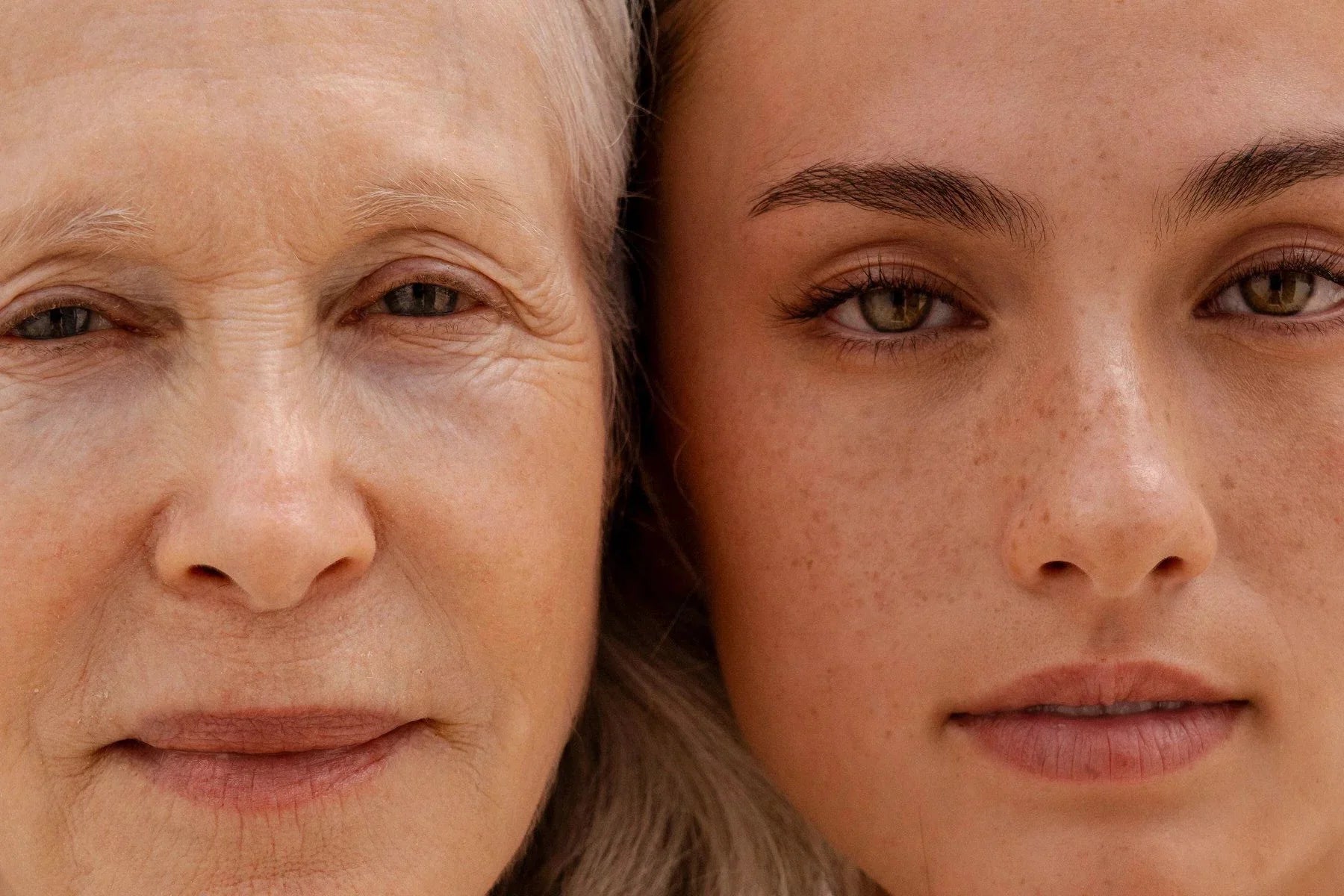
Skin aging results from two main processes: intrinsic (chronological) aging and extrinsic aging — primarily UV damage. A common mechanism is involved in both processes: the reduction of collagen production by fibroblasts in the dermis, and MMP enzymes breaking down existing collagen and elastin fibers. Consequently, the stratum corneum's moisture retention capacity decreases, TEWL (transepidermal water loss) increases, and the skin thins.
It is estimated that collagen loss occurs at a rate of approximately 1% per year from the age of 25. By age 50, dermal collagen density may be 20–30% lower compared to youth. This process can be slowed down and partially reversed by choosing the right active ingredients. However, ingredient selection must be evidence-based.
5 Proven Anti-Aging Active Ingredients
The following five ingredients are among the most potent anti-aging actives, supported by randomized controlled trials and clinical data.
| Active Ingredient | Key Mechanism of Action | Evidence Level |
|---|---|---|
| Retinol / Retinoids | Fibroblast activation, stimulation of collagen synthesis, MMP-1 inhibition, acceleration of cell turnover | High — RCT |
| Vitamin C (Ascorbic Acid) | Antioxidant protection; collagen prolyl hydroxylase cofactor; suppression of melanin synthesis | High |
| Niacinamide (Vitamin B3) | MMP-1 and MMP-2 inhibition, increased Type 1 collagen synthesis, barrier strengthening | High — RCT |
| Peptides (Matrixyl, Argireline) | Signal peptides stimulating collagen synthesis; reduction of mimic wrinkles through neuropeptide inhibition | Medium–High |
| AHA (Glycolic / Lactic Acid) | Removal of dead cell layer; reduction of superficial wrinkles | High |
Retinol: The Gold Standard of Anti-Aging
Retinol converts to retinoic acid in the skin, activating the RAR (retinoic acid receptor) pathway. This process stimulates fibroblasts, increasing type I procollagen production and suppressing AP-1 transcription factor, thereby reducing MMP activity. A randomized clinical trial published in JAMA Dermatology evaluated retinoid efficacy through the MMP-2 biomarker, revealing that tretinoin precursors exhibit a complex metabolic transformation beyond expectations. 12 weeks of retinol use was shown to reduce wrinkle severity by 4.11%. If you are new to using retinol, be sure to check out our retinol beginner's guide.
Vitamin C: Antioxidant and Collagen Cofactor
Ascorbic acid is a critical cofactor for the prolyl hydroxylase enzyme in collagen synthesis; without this enzyme, the collagen triple helix structure cannot form. It also neutralizes UV-induced free radicals, suppressing melanogenesis. Its effects on evening skin tone and brightness with regular use are supported by clinical data. For detailed information, you can review our Vitamin C serum guide.
Niacinamide: A Versatile Anti-Aging Component
Niacinamide exerts its anti-aging effects through multiple pathways. A randomized controlled trial by Lee et al. (2020) from Yonsei University's Department of Dermatology showed that niacinamide reduces MMP-1 and MMP-2 expression and increases Type 1 collagen synthesis. Additionally, niacinamide reduces hyperpigmentation by inhibiting the transfer of melanosomes to keratinocytes and strengthens barrier function by supporting ceramide synthesis. You can consult our comprehensive guide on niacinamide.
Peptides: Signaling Pathway for Collagen Synthesis
Signal peptides (Matrixyl / palmitoyl pentapeptide-4) send signals to fibroblasts in the dermis to produce collagen. Neuropeptide inhibitors (Argireline / acetyl hexapeptide-3) gently reduce repeated muscle contractions of the face, softening expression lines. Peptide serums often work synergistically with retinol or AHA. In our peptide serum guide, you can find a detailed comparison of formulations.
AHA: Superficial Renewal and Brightness
Alpha-hydroxy acids, especially glycolic acid, effectively remove accumulated dead skin cells by weakening corneocyte connections (desmosomes) in the epidermis. This process creates both a visible smoothing effect on the surface and a signaling effect that mildly stimulates collagen synthesis in the deeper layers. Regular use at 5–10% concentrations significantly improves superficial wrinkles and uneven skin tone.
Designing an Anti-Aging Routine Based on Skin Type
Which active ingredient to use, in what order, and at what intensity largely depends on your skin type. The same ingredient can show different effects and tolerance profiles on different skin types.
Dry and Mature Skin
Dry and mature skin has high TEWL; barrier function is weakened. Strong exfoliants or high-concentration retinol can cause irritation. Light Vitamin C serum or niacinamide should be preferred in the mornings, and low-concentration retinol (0.025–0.05%) or peptide-rich products should be started in the evenings. Low-concentration lactic acid (the gentlest form of AHA) 1–2 times a week is sufficient for superficial renewal.
Evening routine example: Cleansing → Toner → Peptide/retinol serum → Rich collagen-boosting moisturizer → Eye cream
Combination and Oily Skin
For combination and oily skin, the niacinamide + AHA combination is particularly effective due to high sebum production; it controls oiliness while providing anti-aging benefits. Retinol is generally better tolerated by this skin type; concentrations can be increased faster than for dry skin. Lightweight serums and gel-based moisturizers should be preferred.
Evening routine example: Cleansing → AHA toner (3 times a week) → Niacinamide or retinol on non-AHA nights → Light moisturizer → Eye cream
Recommended Products for Your Skin Type
For Dry and Mature Skin


For Combination and Oily Skin
![Alphascience Phytic [Tc] Serum](https://cdn.shopify.com/s/files/1/0708/3815/7541/files/AS-Phytic-Texture.jpg?v=1739148198)


For Sensitive Skin


Frequently Asked Questions
Can retinol and vitamin C be used in the same routine?
Vitamin C (ascorbic acid) is stable at an acidic pH; retinol prefers a neutral-alkaline pH. It is suggested that when used simultaneously, vitamin C can oxidize retinol. In practice, the safest approach is to use vitamin C in the morning and retinol in the evening; this preserves the efficacy of both ingredients and minimizes the risk of irritation.
At what age should anti-aging actives be started?
For preventative (proactive) use, the 25–30 age range is frequently suggested in the literature as a starting point. However, at any age, the most important single step is the regular use of broad-spectrum SPF. UVA rays can trigger collagen breakdown even on cloudy days and through glass; therefore, sunscreen is considered the most fundamental anti-aging investment.
Can retinol and AHA be used on the same night?
When used together, the risk of irritation and barrier damage increases. Before the skin acclimates to these ingredients, alternating use is recommended: AHA on some nights of the week, retinol on others. As skin tolerance increases, combination may be attempted; however, starting one by one initially is key to safety.
Are peptides as effective as retinol?
Retinol and peptides work through different mechanisms; they are complementary rather than alternatives. Retinol provides stronger cell turnover, while peptides can be preferred for sensitive skin or during periods when retinol use is not suitable (such as pregnancy). When used together, they are thought to provide a synergistic effect.
Conclusion
Anti-aging skincare begins with integrating a few effective actives, based on scientific principles, into your routine. Retinol is a leader in collagen renewal, vitamin C is an antioxidant and brightening powerhouse, niacinamide offers MMP inhibition and barrier support, peptides provide structural care through signaling, and AHAs are the most proven options for superficial renewal. When you combine these five actives according to your skin type and tolerance, it is possible to achieve visible and measurable results over time.
If you are unsure which product is best for you, you can take advantage of our free skincare consultation service.
References
- Chien AL, Tsai J, Levin M, et al. Biomarkers of Tretinoin Precursors and Tretinoin Efficacy in Patients With Moderate to Severe Facial Photodamage: A Randomized Clinical Trial. JAMA Dermatol. 2022;158(8):879-886. PMID: 35675051
- Nguyen N, Ahmad SA, Chodavadia P, et al. A prospective, double-blinded, randomized head-to-head clinical trial of topical adapinoid versus retinol. Skin Health Dis. 2024;4(6):e469. PMID: 39624736
- Lee YI, Kim S, Kim J, et al. Randomized controlled study for the anti-aging effect of human adipocyte-derived mesenchymal stem cell media combined with niacinamide after laser therapy. J Cosmet Dermatol. 2020;20(6):1774-1781. PMID: 33103316