Preservatives in Cosmetic Products: Is Phenoxyethanol Safe? Scientific Risk Classification of All Preservatives
"A safe formulation is evaluated not by unsustainable claims, but by scientific exposure data and the principle of correct dosage."
– Pharmacist Berfin IşıkMany consumers become anxious when they see the word "phenoxyethanol" on the label of cosmetic products. However, without preservative systems that protect a cosmetic formula against the growth of bacteria, fungi, and yeasts, most water-based products would spoil the day they are placed on the shelf. In this article, we address all major preservatives used in cosmetics with scientific data, classify their risks, and demonstrate why phenoxyethanol is a rational choice.
Why Are Preservatives Used in Cosmetic Products?
Any formula containing water—that is, moisturizers, serums, toners, gels, and shampoos—creates a natural breeding ground. Bacteria like Staph. aureus or Candida species proliferate in these environments; a poorly preserved product applied to the skin can lead to infection, inflammation, and barrier damage. The European Cosmetics Regulation (EC) No 1223/2009 mandates formula safety by listing permitted preservatives and their maximum concentrations. No substance not included in the EU's approved list can be used as a preservative in cosmetics placed on the market.
Simply put: A serum without a preservative can be thought of as food left open. Preservatives ensure the product remains safe.
Types of Preservatives Used in Cosmetics
1. Phenoxyethanol
It is a component from the glycol ether family. It effectively inhibits gram-positive and negative bacteria, yeasts, and fungi. In Europe, it is limited to a maximum concentration of 1%. The SCCS (Scientific Committee on Consumer Safety) confirmed in 2016 that it is safe for all age groups at the 1% limit [PMID: 27825833]. It is among the most widely used preservatives due to its low allergy potential, broad-spectrum antimicrobial effect, and synergy with other preservatives.
Simply put: Phenoxyethanol is approved by regulatory bodies, backed by research, and widely used—this is a sign of a good preservative, not a bad one.
2. Parabens (Methylparaben, Ethylparaben, Propylparaben, Butylparaben)
They have been used as standard preservatives in cosmetics for decades. They are effective at low concentrations, chemically stable, and broad-spectrum. However, they have become controversial in public opinion due to showing weak estrogenic activity in animal studies. A revised safety assessment published in 2020 concluded that short-chain parabens (methyl, ethyl) are safe at a total limit of 0.8%, while more restrictive limits were recommended for propyl and butylparaben [PMID: 32723119].
Simply put: The fear surrounding parabens stems more from marketing language than scientific data. Short-chain parabens are still considered safe.
3. Formaldehyde Releasers (DMDM Hydantoin, Imidazolidinyl Urea, Diazolidinyl Urea)
These components exhibit an antimicrobial effect by releasing controlled amounts of formaldehyde into the formula. Formaldehyde is a potent skin sensitizer; thus, releasers also carry a risk of contact allergy. A 2022 clinical review documents that contact dermatitis cases related to formaldehyde releasers can manifest as facial, hand, and general dermatitis [PMID: 35229319]. Their use has been restricted in Europe, and many brands have removed them from their formulations.
Simply put: If you see DMDM Hydantoin or Imidazolidinyl Urea in the INCI list, it means the product releases controlled formaldehyde. This group is best avoided for sensitive or atopic skin.
4. Isothiazolinones (MIT, CMIT)
Methylisothiazolinone (MIT) and Chloromethylisothiazolinone (CMIT) show strong antibacterial effects; however, the rate of contact allergy is extremely high. The European Union has banned MIT in leave-on products (face creams, serums); it is only allowed in rinse-off products (like shampoo) in restricted amounts. This group carries the highest sensitization risk among cosmetic preservatives.
Simply put: MIT is legally removed from most facial products today—fear in this regard is not misplaced.
5. Organic Acids and Their Salts (Benzoic Acid, Sorbic Acid, Sodium Benzoate, Potassium Sorbate)
These preservatives, also found in nature, are effective at low pH levels and are particularly suitable for acid-containing formulas (peelings, vitamin C). Their allergy potential is low; however, their effectiveness decreases in formulas with pH > 5, requiring a combined system. They are observed to be used in combination with phenoxyethanol in Luishe Tokyo's serums.
Simply put: The first choice for those seeking "natural" preservatives; but they do not provide the same protection in every formula.
6. Benzyl Alcohol
Can be used as both a solvent and a preservative. It is effective against gram-positive bacteria, fungi, and yeasts. While its allergy potential is low to moderate, it can cause eye irritation. It sometimes misleads consumers as it can appear in the INCI list as both a fragrance and a preservative.
7. Chlorphenesin
It is particularly effective in inhibiting gram-negative bacteria and fungi; it is broad-spectrum like phenoxyethanol. Its allergy potential is low; fewer than 15 cases of contact allergy have been reported since 1980. It is used in combination with benzyl alcohol in products like Alphascience HA Booster Serum.
8. Modern / Alternative Preservatives
Modern ingredients such as Ethylhexylglycerin, 1,2-Hexanediol, Pentylene Glycol, and Caprylyl Glycol are combined with phenoxyethanol or chlorphenesin, especially for sensitive formulas. They do not provide complete antimicrobial protection on their own; they form a synergistic system. This approach is preferred in products like Genosys Hydro Soothing Cream.
Simply put: The phrase "phenoxyethanol-free" does not always mean better—one should ask what alternatives are preserving the formula.
Preservative Risk Classification
| Preservative | Risk Level | Main Risk | EU Status |
|---|---|---|---|
| Phenoxyethanol (1%) | Low | Rare contact allergy | Approved, 1% limit |
| Short-chain Parabens | Low | Weak estrogenic activity (clinical significance debatable) | Approved, total 0.8% |
| Benzyl Alcohol, Chlorphenesin | Low–Moderate | Eye irritation, rare allergy | Approved |
| Organic Acids (Benzoate, Sorbate) | Low | pH-dependent efficacy, insufficient standalone protection | Approved |
| Formaldehyde Releasers (DMDM, Urea) | High | Contact allergy, sensitization | Restricted |
| Isothiazolinones (MIT, CMIT) | Very High | High sensitization, contact dermatitis | Banned in leave-on products |
Why is Phenoxyethanol Necessary?
Phenoxyethanol is a component with a broad antimicrobial spectrum that works synergistically with other preservatives. When combined with Ethylhexylglycerin or 1,2-Hexanediol, the concentration of both can be reduced, making the formulation gentler. According to the 2019 clinical review by Dréno et al., the use of phenoxyethanol alone or in combination is considered one of the most reliable options for cosmetic preservation [PMID: 31588615]. Most alternatives—isothiazolinones, formaldehyde releasers—carry a much higher allergy risk.
Simply put: Phenoxyethanol is one of the preservatives with the best risk-benefit balance among existing options. Removing it from a formula often means switching to a riskier alternative.
Why is Phenoxyethanol Risk-Free at the Appropriate Dose?
The SCCS has determined that the safety margin (MoS) for a 1% concentration of phenoxyethanol is sufficient by examining its human dermal absorption, metabolism kinetics, and toxicokinetic data [PMID: 27825833]. A 2020 study comparing the skin irritation potential of preservatives revealed that phenoxyethanol, at practically used concentrations, produces a mild erythematous response, but this response remains clinically insignificant [PMID: 32492262]. A study published in 2023, examining the effect of cosmetic preservatives on healthy skin cells, showed that phenoxyethanol at normal use concentrations does not significantly affect cell viability [PMID: 37048149].
An important point: The French National Agency for Medicines and Health Products Safety (ANSM) recommends not using phenoxyethanol in products applied to the diaper area of infants under 3 years old. This restriction is not for all cosmetic use but specifically for the diaper area where the thin and fragile barrier is under intense occlusion.
Simply put: A serum containing 1% phenoxyethanol, formulated at the approved dose—does not affect the skin barrier, does not create cumulative toxicity, and has a low probability of allergy.
Who Should Be Cautious?
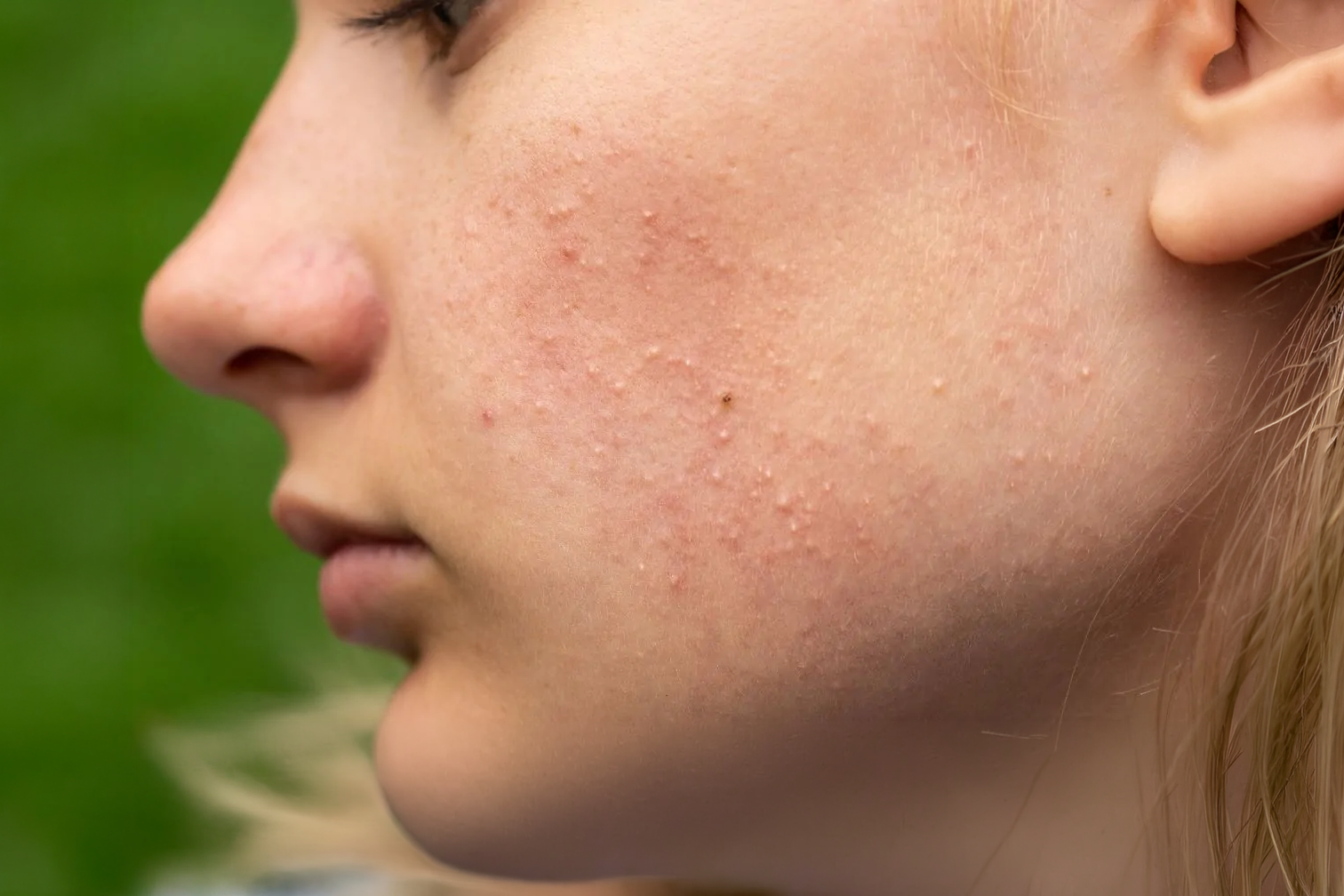
Although phenoxyethanol is low-risk for the general population, caution is advised in certain groups. This group includes individuals with a confirmed history of contact dermatitis, skin with significantly impaired barrier integrity due to atopic dermatitis, and those using products for the baby diaper area. Additionally, since IgE-mediated allergic reactions have been reported in rare cases, individuals who have previously developed reactions to chemical preservatives should make their decision after a patch test.
Simply put: 1% phenoxyethanol is not a problem for healthy adult skin. If it's for the baby's diaper area or for skin with severe atopic barrier damage, choose a formula without or with alternative preservatives.
Products Containing Phenoxyethanol at Medicblu
In the following products, phenoxyethanol is verified in the INCI list and combined with ethylhexylglycerin as an effective synergistic system. All formulas are manufactured in compliance with EU regulatory limits.


Frequently Asked Questions
Is phenoxyethanol harmful?
No. The European Scientific Committee on Consumer Safety (SCCS) and dozens of independent studies confirm its safety for all age groups when used at a 1% concentration.
Should I stop using a product if I see "Phenoxyethanol" in the INCI list?
No. Phenoxyethanol is one of the preservatives with the lowest allergy potential among currently approved ones. It is advisable to be more cautious if high-risk preservatives such as DMDM Hydantoin or MIT are on the list.
Is phenoxyethanol safer than parabens?
Both are approved and considered safe by regulatory authorities. Phenoxyethanol does not have the estrogenic activity debate, whereas for short-chain parabens, this debate is still ongoing. In practice, the difference is minimal.
Can phenoxyethanol be used in baby products?
The SCCS has found it safe for all age groups. However, the French National Agency for Medicines and Health Products Safety (ANSM) recommends not using it in products applied to the diaper area of infants under 3 years old. There are no restrictions for face and body areas.
Are formaldehyde releasers more dangerous than phenoxyethanol?
Yes. Formaldehyde releasers like DMDM Hydantoin and Imidazolidinyl Urea carry a much higher risk of contact allergy and sensitization compared to phenoxyethanol. For sensitive skin or atopic dermatitis, it is recommended to avoid products containing this group.
Can I use products containing Isothiazolinone (MIT) on my face?
No. The European Union has banned methylisothiazolinone (MIT) and CMIT in rinse-off products (cream, serum, lotion). A facial product containing this substance is not compliant with EU standards and carries a high risk of sensitization.
Conclusion
To make informed decisions about cosmetic preservatives, simply reading the INCI list is not enough; one must know the risk profile of each ingredient. Phenoxyethanol is one of the documented safest options when compared to formaldehyde releasers or isothiazolinones. The phrase "phenoxyethanol-free" does not mean a product is safer; it simply means a different preservative system has been chosen. The risk profile of that system must be scrutinized with the same rigor.
Scientific References
- Dréno B et al. Safety review of phenoxyethanol when used as a preservative in cosmetics. J Eur Acad Dermatol Venereol. 2019;33(Suppl 7):15-24. PMID: 31588615
- SCCS. Opinion on phenoxyethanol in cosmetic products. Regul Toxicol Pharmacol. 2016;82:156. PMID: 27825833
- Ma X et al. Skin irritation potential of cosmetic preservatives: An exposure-relevant study. J Cosmet Dermatol. 2020;20(1):195-203. PMID: 32492262
- Cherian P et al. Amended safety assessment of parabens as used in cosmetics. Int J Toxicol. 2020;39(1 Suppl):5S-97S. PMID: 32723119
- Glaz P et al. Effect of commonly used cosmetic preservatives on healthy human skin cells. Cells. 2023;12(7):1076. PMID: 37048149
- Goossens A, Aerts O. Contact allergy to and allergic contact dermatitis from formaldehyde and formaldehyde releasers. Contact Dermatitis. 2022;87(1):20-27. PMID: 35229319
This article was prepared by Pharmacist Berfin Işık for informational purposes only.