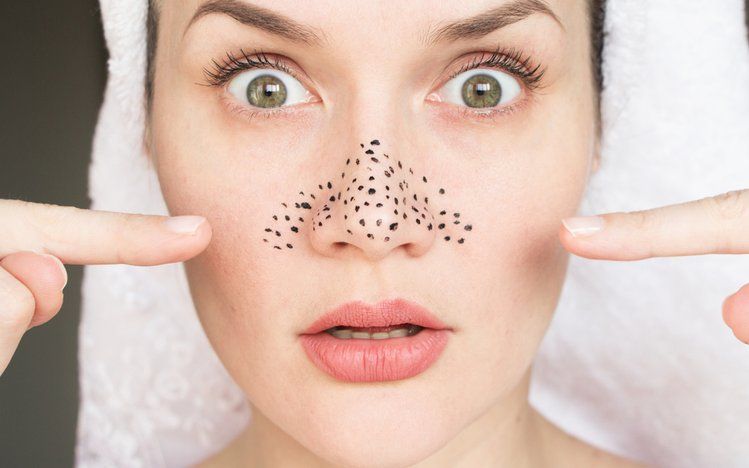
Pore and Blackhead Care
Prepared by Pharmacist Berfin Işık. As a pharmacist specializing in pharmaceutical and cosmetic formulations, she follows current scientific literature on sebum and pore management. This content is for informational purposes only and is not a substitute for medical advice.
Pores and blackheads are among the most common and most frequently mismanaged skin concerns. While it's not possible to "eliminate my pores," it is scientifically possible to significantly reduce their appearance and control blackheads. In this guide, we examine the causes and proper care of pores and blackheads from a pharmacist's perspective.
Why Do Pores Become More Visible?
Pores are essentially the openings of hair follicles and everyone has them. Scientific literature identifies three main reasons for prominent pores: high sebum (oil) production, decreased elasticity around the pore (due to aging and sun damage), and increased volume of the hair follicle. Additionally, chronic recurrent acne, sex hormones, and an improper skincare routine also affect pore size. Identifying the cause is key to choosing the right solution.
What Are Blackheads?
Blackheads (open comedones) form when the follicular opening fills with dead cells and sebum, and this content comes into contact with air and oxidizes, causing it to darken. Thus, the black color is not dirt but oxidized sebum; therefore, harsh scrubbing or squeezing will not resolve blackheads and can instead cause inflammation and pore damage. Whiteheads (closed comedones) are the same blockage but in a closed state, not exposed to air.
Effective Actives on the Skin
| Active | Effect |
|---|---|
| Salicylic Acid (BHA) | With its oil-dissolving (lipophilic) structure, it penetrates into the follicle; dissolves blackheads and blockages. |
| Niacinamide | Balances sebum production and reduces the appearance of pores. |
| Retinoid | Regulates keratinization, preventing new comedone formation; improves texture and pore appearance. |
| AHA (glycolic/lactic) | Removes superficial dead cells, providing smoothness and radiance. |
Scientific Approach
Reviews evaluating pore treatments emphasize that prominent pores are multifactorial and that treatment should be personalized according to the underlying cause. For sebum-related pores, sebum-balancing actives (niacinamide, BHA) are prominent; for pores due to aging/loss of elasticity, topical retinoids and collagen-supporting approaches are favored. Topical retinoids, chemical peels, and certain device/laser applications are the main options for improving pore appearance. We discussed niacinamide in our separate guide and retinoids in our retinol guide.
How to Care for Your Skin?
An effective pore and blackhead routine consists of: gentle (sulfate-free) cleansing, BHA a few times a week, daily niacinamide, and a nighttime retinoid (according to tolerance) with light, water-based hydration. Broad-spectrum SPF during the day is critical; because sun damage can reduce elasticity around the pores, making them larger. Things to avoid: squeezing blackheads, harsh physical scrubs, and excessively oily products. We discussed oily skin management in detail in our oily skin article.
Recommended Products


Frequently Asked Questions
Can pores be permanently closed?
No. Pores are anatomical structures; they cannot be completely eliminated or "closed." However, their appearance can be significantly reduced by balancing sebum, clearing blockages, and supporting elasticity.
Is squeezing blackheads harmful?
Yes. Squeezing can lead to inflammation, scars, and damage around the pore, making it even more prominent. The correct way to address blackheads is through regular care with actives like BHA and retinoids.
Do pore strips work?
Pore strips only mechanically pull out the tip of the surface plug; they do not resolve the underlying cause, and blackheads will reappear shortly. Frequent use can also cause irritation. For lasting results, active-based care is necessary.
I have dry skin but also blackheads, is that normal?
Yes. Blackheads are not exclusive to oily skin; they can appear on any skin type, especially on the nose and T-zone. In this case, both gentle exfoliation and barrier-friendly hydration should be performed together.
Conclusion
Pore and blackhead care is about "management" rather than "elimination": correctly identifying the cause, regularly using actives that balance sebum and clear blockages (BHA, niacinamide, retinoids), and supporting elasticity with sun protection. For a pore care plan suitable for your skin, you can get support from Medicblu experts.
References
- Lee SJ, Seok J, Jeong SY, et al. Facial Pores: Definition, Causes, and Treatment Options. Dermatol Surg. 2016;42(3):277-285. PMID: 26918966 · DOI: 10.1097/DSS.0000000000000657
- Dong J, Lanoue J, Goldenberg G. Enlarged facial pores: an update on treatments. Cutis. 2016;98(1):33-36. PMID: 27529707