Active Layering Order: Which Serum First?
Prepared by Pharmacist Berfin Işık. As a pharmacist specializing in pharmaceutical and cosmetic formulation, she keeps abreast of current scientific literature on active ingredient safety and skincare routines. This content is for informational purposes only and does not constitute medical advice.
The order of active layering is one of the most frequently asked but least understood topics in skincare: if you apply the right products in the wrong order, even the most expensive serum won't deliver the results you expect. In this guide, we answer the question "which serum first?" with a simple and practical logic, from a pharmacist's perspective.
Why is Layering Important?
Skincare products should be applied in a specific order for their active ingredients to reach the skin. Incorrect layering leads to two problems: (1) the absorption of actives is hindered — for example, a thin serum cannot penetrate a heavy cream; (2) some actives lose their effectiveness or increase irritation in the wrong pH environment. Correct layering enhances both efficacy and tolerability.
Basic Rule: Thinnest to Thickest
The simplest and most reliable rule is this: layer products from the thinnest (water-based) texture to the thickest (oil-based) texture. Water-based products penetrate the skin first; oil-based and occlusive formulas create a locking layer on top. This logic dictates the general flow:
| Order | Step | Note |
|---|---|---|
| 1 | Cleanser | Gentle, pH-balanced cleansing |
| 2 | Toner / Essence | Water-based; hydration and preparation |
| 3 | Water-based serum (e.g., niacinamide, hyaluronic acid) | Thinnest textures first |
| 4 | Treatment active (retinol, acid — on separate nights) | Apply to dry skin |
| 5 | Moisturizer / Cream | Locks in moisture, supports barrier |
| 6 | Sunscreen (morning only) | Always last, on top |
pH and Compatibility: Which Actives to Separate?
Some actives require a specific pH environment for efficacy; therefore, not every active works well with every other active at the same time. The efficacy of acids (AHA/BHA) depends on a low pH, while retinol requires a neutral environment; literature emphasizes that the formulation pH and concentration of acids are crucial for efficacy and irritation. Practical rules:
- Vitamin C (ascorbic acid) in the morning, retinol in the evening: Used at separate times due to different pH preferences and retinol's degradation under UV light.
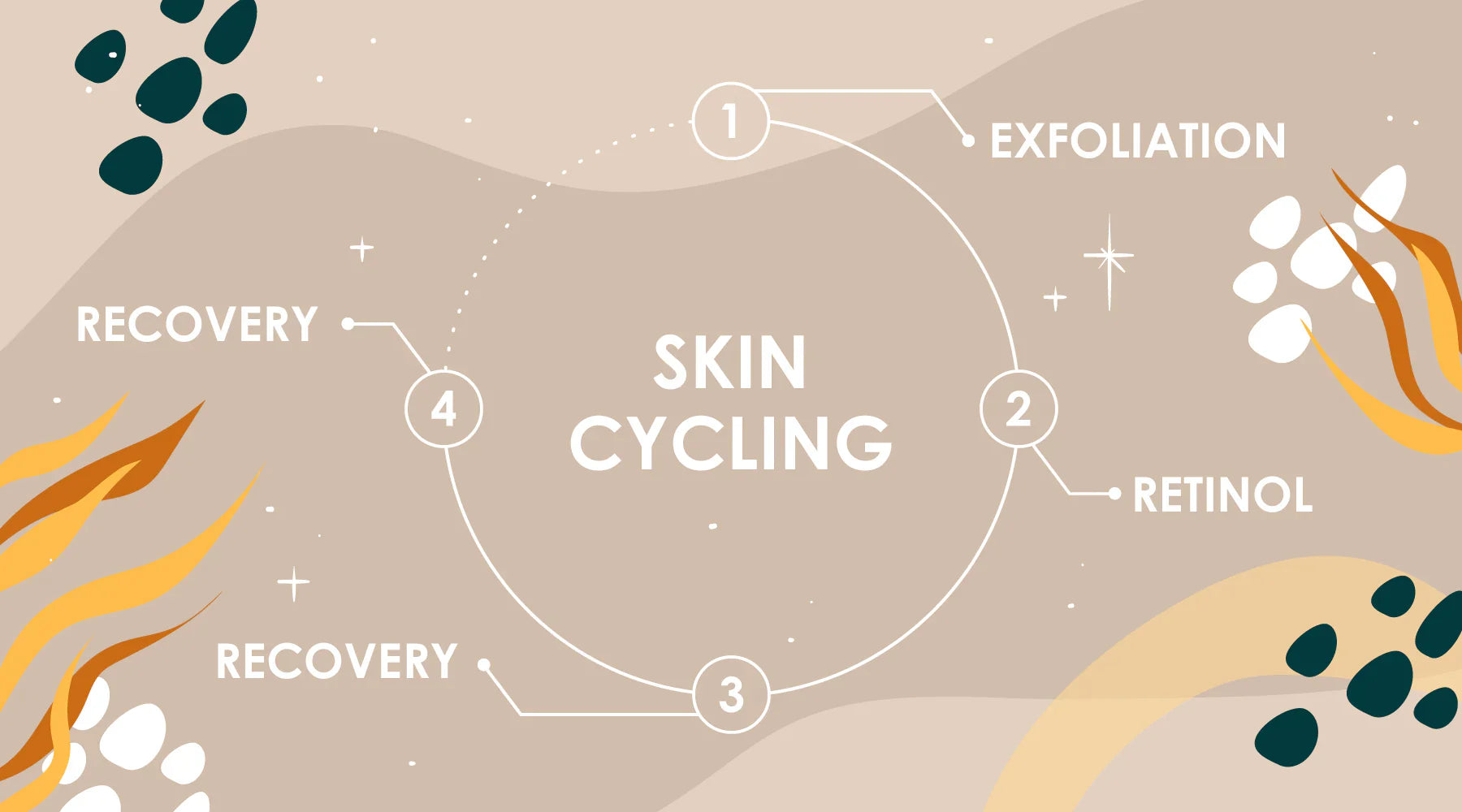
- Do not use retinol and AHA/BHA on the same night: This can exacerbate barrier stress; separate them on different nights (e.g., skin cycling).
- Niacinamide is compatible with most actives: Can be layered with almost any serum.
- Sunscreen is always last and on top: No other products should be applied over it.
For a practical framework that translates this logic into a daily routine, you can check out our skin cycling guide. We've covered retinol in detail in our retinol guide and niacinamide in a separate article.
Sample Routines
Morning: Cleanser → Toner → Vitamin C serum → niacinamide/hyaluronic acid serum → moisturizer → broad-spectrum SPF.
Evening (retinol night): Cleanser → (to dry skin) retinol → moisturizer. Evening (acid night): Cleanser → AHA/BHA toner/serum → moisturizer. On non-active nights, only soothing moisture is applied.
Recommended Products


Frequently Asked Questions
Serum first, or moisturizer?
Serum comes first. Serums are typically thin, water-based, and have high active concentrations; they need to penetrate the skin. Moisturizer is applied over it to lock in both the serum and the skin's moisture.
Should I wait between each step?
Generally not required; however, waiting 1–2 minutes after strong actives like acids or retinol can help the skin absorb the product and reduce the risk of irritation. It's crucial for the skin to be completely dry before applying actives.
How many serums can be used together?
To avoid overwhelming the skin, it's best not to layer more than 2–3 actives in the same routine. If you use more than one strong active, separate them by time (morning/evening) or by different nights.
Where does sunscreen go?
It's always the last step of the morning routine and goes on top. No other skincare products should be applied over it; SPF's protection is most effective when it's the outermost layer.
Conclusion
Active layering isn't a complex science; it can be summarized by the rules of "thinnest to thickest" order, separating pH-sensitive actives, and applying SPF last. The correct order ensures you get the maximum benefit from your products. For a personalized layering plan for your skin, you can get support from Medicblu experts.
References
- Almeman AA. Evaluating the Efficacy and Safety of Alpha-Hydroxy Acids in Dermatological Practice: A Comprehensive Clinical and Legal Review. Clin Cosmet Investig Dermatol. 2024;17:1661-1685. PMID: 39050562 · DOI: 10.2147/CCID.S453243
- Mukherjee S, Date A, Patravale V, et al. Retinoids in the treatment of skin aging: an overview of clinical efficacy and safety. Clin Interv Aging. 2006;1(4):327-348. PMID: 18046911 · DOI: 10.2147/ciia.2006.1.4.327