Mamaaura Stretch Mark Cream 2026: Does It Work? Guide
When dealing with pregnancy stretch marks, knowing how you support your skin's barrier shapes the result just as much as choosing the right product. This guide offers anyone looking for a Mamaaura stretch mark cream an up-to-date, science-backed repair protocol for 2026.
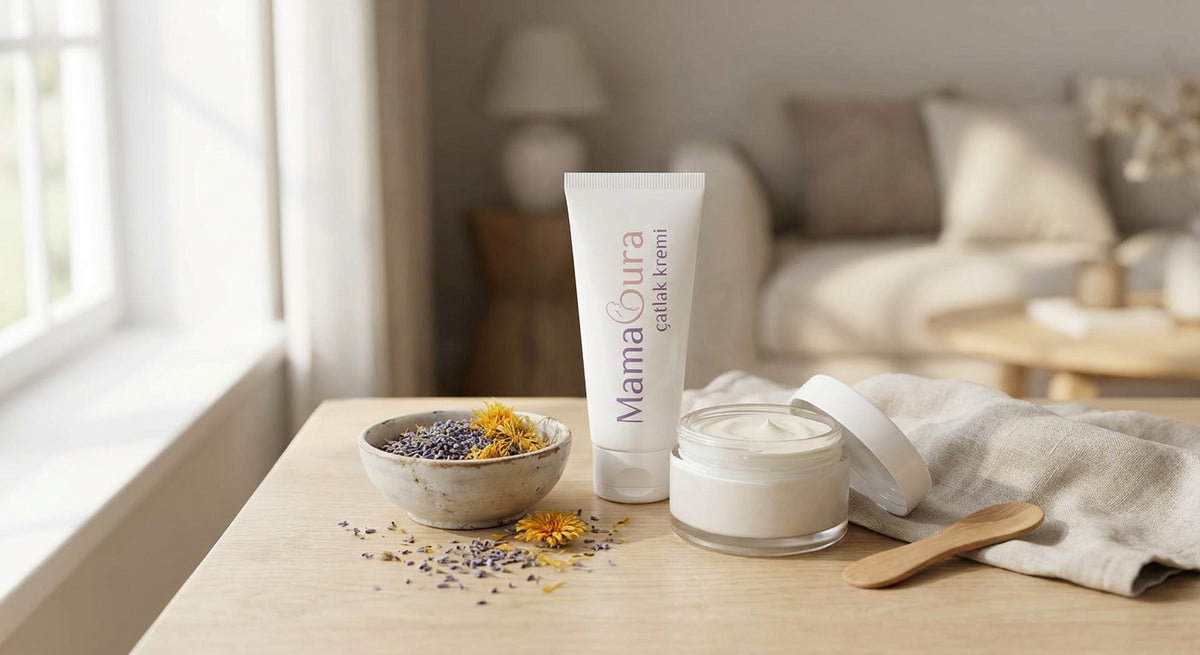
- For those looking for a Mamaaura stretch mark cream, Mamaaura Baby Moisturizing Cream offers barrier-friendly hydration: Consider.
- Stretch mark repair starts with strengthening the skin barrier; formulas containing ceramides and hyaluronic acid should be the priority.
- Pregnancy stretch marks usually become noticeable in the 6th-7th month; starting to moisturize early increases the effect.
- Products containing retinoids should be a Skip during pregnancy and breastfeeding; barrier-repairing alternatives should be preferred.
Why It Matters
Pregnancy stretch marks (medically known as striae gravidarum) form when the collagen and elastin network in the dermis tears at a micro level in response to rapid stretching of the skin. These marks usually become noticeable in the 6th-7th month of pregnancy and most often appear on the abdomen, hips, inner thighs and breasts. Hormonal changes, especially increased cortisol, also negatively affect collagen production and reduce the tissue's elasticity.
When the skin barrier weakens, trans-epidermal water loss accelerates and the tissue becomes drier and tighter; this contributes to stretch marks looking deeper and more permanent. When the barrier is healthy, the same stretching leaves fewer marks on the tissue because the skin retains its ability to hold moisture.
Medicblu's dermocosmetic approach builds stretch mark care on barrier repair rather than on the search for a single miracle cream. Formulas such as Mamaaura Baby Moisturizing Cream, which have low irritation potential and can be used by the whole family, come into play here: intensively moisturizing the skin and supporting barrier function helps stretch mark tissue fade and look less noticeable. As of 2026, the variety of stretch mark care products on the dermocosmetic market has grown significantly, but effective results still depend on regular and correct application.
Most people looking for a Mamaaura stretch mark cream expect a single product to solve everything; yet an effective routine requires moisturizing, massage and sun protection together. Medicblu's "less product, more results" principle applies to stretch mark care too: instead of a complicated routine with five different products, a two- or three-step routine focused on barrier repair usually gives more consistent results.
What You Need
What to prepare before starting the routine:
- Barrier-repairing moisturizer: Choose a low-fragrance formula containing ceramides, squalane or hyaluronic acid. Products high in alcohol may feel refreshing in the short term, but they dry out the barrier.
- 5-10 minutes for 2 applications a day: Set two fixed times, in the morning after your shower and in the evening before bed. Random application undermines consistency.
- A product tested for sensitive skin: During pregnancy and breastfeeding, options with low irritation potential should be your priority.
- An extra 2-3 minutes for massage: Massage applied in circular motions supports the product's penetration into the skin and local blood circulation.
- Sun protection: Newly formed stretch marks are more sensitive to UV and carry a risk of hyperpigmentation; outdoors, a product with SPF or covering clothing is a must.
The low irritation profile of baby formulations such as Mamaaura Baby Moisturizing Cream also makes them a preferred choice for use on body areas during pregnancy and breastfeeding; however, skin that needs intensive repair may require more concentrated formulas containing ceramides and peptides. Instead of trying five different products at once, a simple selection of two or three products focused on barrier repair usually gives faster and more consistent results.
Steps
1. Cleanse the Skin Gently
Remove daily dirt and sweat build-up with lukewarm water and a sulfate-free cleanser; this step helps the moisturizer penetrate the skin better. Hot water and aggressive rubbing disrupt the skin's lipid layer and weaken the barrier, which increases irritation in the stretch mark area. Cleansing should not take longer than 60 seconds; if your skin feels squeaky, the product you are using is too strong. Expected result: the skin should feel soft, not tight, and ready for moisturizer.
2. Apply Cream to Damp Skin
Applying the cream after showering, while the skin is still slightly damp, increases the occlusive effect and helps trap moisture in the skin. Those who skip this step and apply the cream after the skin has dried completely lose a significant part of its effect. Work it generously into the abdomen, hips and thighs, pressing gently rather than rubbing. Common mistake: using too little product and rubbing it in quickly; this speeds up evaporation, not absorption.
3. Add a Barrier-Repairing Layer
Adding a second layer containing ceramides or squalane on top of the moisturizer speeds up the repair of the skin barrier and prevents moisture loss for longer. No stretch mark cream can show its full effect until the barrier is fully repaired; that is why single-layer routines usually give slow results. Do not neglect this second layer, especially in the first weeks when stretch marks are most active. Expected result: the skin should feel plumper and less tight to the touch.
4. Massage in Circular Motions
Massaging in circular motions with your fingertips for 2-3 minutes supports local blood circulation and makes it easier for the product to penetrate the skin. If the skin is tight, use a light technique; if it is looser, apply a little more pressure. Pressing too hard can cause irritation and redness, especially on fresh stretch marks. Common mistake: skipping the massage and simply spreading the product, which halves absorption.
5. Protect from the Sun During the Day
New stretch marks are more sensitive to melanocyte activity, and unprotected sun exposure can darken the marks. If you will be outdoors, choose covering clothing or apply a product with SPF. This step is often skipped, especially in summer, yet it directly affects the outcome. Expected result: over time, the color of the marks should come closer to that of the surrounding tissue.
6. Apply the Routine Consistently Morning and Evening
Skin barrier repair takes an average of 2-4 weeks, while the epidermal renewal cycle is about 28 days. That is why the routine needs to be continued without interruption for at least 8-12 weeks; occasional application delays visible results or prevents them altogether. Setting a calendar alarm is a practical way to avoid forgetting an application. Common mistake: giving up the routine after not seeing results in the first two weeks.
7. Track Progress with Photos
Taking photos every 4 weeks in the same light and from the same angle makes small improvements visible that the eye would not notice. Judging only by looking in the mirror can lower motivation, because daily change is very small and the eye's familiarity masks the results. Comparing photos reveals real progress and makes the decision to continue the routine easier. Expected result: after 8-12 weeks, a visible difference in the color and texture of the stretch marks.
“No stretch mark cream can show its full effect until the barrier is fully repaired.”
Troubleshooting
- Itching persists: Itching is usually a sign of dryness. Increase application to 3 times a day and switch to a fragrance-free formula with low irritation potential.
- Stretch marks still look red: The red/purple stage (striae rubra) means they have not yet matured. Results should not be expected before 8-12 weeks during this stage, as the tissue is still in an active healing process.
- The product does not absorb and feels greasy: You may be applying too much product at once. Reducing the amount and increasing the number of layers gives better absorption than applying one thick layer.
- Which ingredients to avoid during pregnancy: Retinoids and high-dose salicylic acid are not recommended during pregnancy and breastfeeding. During this period, barrier-repairing products with a low active-ingredient load should be preferred.
- Unsure about application areas while breastfeeding: If you applied the product to the breast area, wiping the area with lukewarm water before contact with your baby is a sufficient precaution.
- Does the product's scent pass to the baby: Low-fragrance formulas minimize this risk; fragrance-free or very lightly scented products are preferred during breastfeeding.
- No visible results: The routine should not be evaluated until at least 8 weeks have passed since starting; quitting early is the most common mistake and prevents barrier repair from being completed.
Tools and Resources
What to have on hand to build a complete routine:
- Barrier-repairing moisturizer (with ceramides, squalane or hyaluronic acid)
- A 2-3 minute time slot set aside for massage
- A product with SPF or covering clothing for sun protection
- Skin barrier: definition, repair and protection guide, for those who want to understand barrier function in more depth
- If you need a personalized assessment, Medicblu's online consultation service clarifies the product combination suited to your skin type and stretch mark stage
Medicblu's dermocosmetic team recommends personalizing the routine according to stretch mark type (active/mature) and skin sensitivity; a layered approach usually gives more consistent results than choosing a single Mamaaura stretch mark cream. In 2026, recommendations obtained through consultation are preferred as a way to shorten the trial-and-error process.
What's Next
After completing barrier repair, the next step is to protect the skin's overall moisture balance in the long term. Understanding the role of ceramides and hyaluronic acid in the barrier helps not only with stretch marks but also with problems such as dryness, sensitivity and seasonal moisture loss. Expanding your routine from stretch mark care to general skin barrier care is a logical next step that increases your skin's resilience throughout 2026.
FAQ
Can Mamaaura stretch mark cream be used during pregnancy?
Yes, thanks to its low irritation potential, Mamaaura Baby Moisturizing Cream can be used on body areas during pregnancy. Before switching to a new product, a 24-hour test on a small area is recommended.
Which ingredients should the best stretch mark cream contain?
An effective stretch mark cream should contain barrier-repairing ingredients such as ceramides, hyaluronic acid and squalane. The formulas that stand out in 2026 combine these ingredients with a low fragrance content.
Do stretch marks go away completely?
Stretch marks do not disappear completely, but with regular care they become significantly less noticeable. Fresh red/purple stretch marks (striae rubra) respond better to care than mature white marks (striae alba).
When should stretch mark cream be applied?
The cream gives the best results when applied after showering, while the skin is still damp. Applying at least 2 times a day, morning and evening, determines consistency.
Are products containing retinol good for stretch marks?
Retinol may support collagen production in mature stretch marks, but it is not recommended during pregnancy and breastfeeding. During this period, barrier-repairing, retinoid-free alternatives should be preferred.
Is it safe to use stretch mark cream while breastfeeding?
Fragrance-free formulas with low irritation potential are considered safe during breastfeeding. If applied to the breast area, wiping the area before contact with the baby is sufficient.
How long does it take for stretch mark cream to show results?
Skin barrier repair takes an average of 2-4 weeks, and visible improvement requires 8-12 weeks of regular use. Since the epidermal renewal cycle is about 28 days, results appear gradually.
How does the skin barrier affect stretch mark formation?
A weak skin barrier accelerates moisture loss and reduces the tissue's elasticity, which makes stretch marks look deeper. Barrier repair is considered the fundamental step of stretch mark care.
A Final Note
Most people apply stretch mark cream only to the abdomen; yet the hips, inner thighs and the area under the bust are exposed to the same stretching and are usually neglected. Medicblu's dermocosmetic advice is clear: apply the routine equally to all stretched areas rather than focusing on a single spot. Because most care routines in 2026 skip this detail, the results turn out uneven; one area improves while another stays the same.